Find professional Tacoma pressure washing you can count on. We provide certified specialists who precisely select PSI, nozzles, and cleaning solutions to every surface type, implement soft wash methods for siding and shingles, and use hot water for oily concrete. We successfully tackle moss, algae, and salt film, safely manage runoff according to Tacoma stormwater rules, and safeguard landscaping. Trust in licensed, insured technicians, comprehensive SOPs, and clear line-item pricing. Scheduled maintenance stops coating failure and rot, saving money. Read on to learn about our methods, pricing, and vetting procedures.
Main Highlights
- Certified experts using precision tools and professional cleaning approaches matched precisely to each surface to prevent any damage (PWNA/UAMCC).
- Licensed and fully insured in both Washington and Tacoma; provide $1M+ liability and workers' comp certificates directly from our insurance copyright.
- Emphasizing compliance: runoff capture and water reclamation, maintaining on-site SDS documentation, and full compliance with Tacoma stormwater and OSHA safety regulations.
- Local Tacoma specialization: advanced hot-water removal of oil deposits, comprehensive moss and algae treatment, and protective treatments to prevent regrowth in the area's wet, salt-rich environment.
- Comprehensive workflow: pre-service checklist, safe distance evaluation, mid-job status reports, and completion inspection featuring visual documentation and upkeep guidance.
Understanding the Value of Professional Pressure Washing in Tacoma
Even though DIY tools appear cost-effective, Tacoma's humid weather, moss accumulation, and coastal air necessitate professional pressure washing to safeguard surfaces and avoid damage. You need calibrated PSI, correct nozzles, and appropriate detergents matched to contaminants and substrate. Skilled contractors analyze water damage potential, set safe standoff distances, and contain wastewater to comply with community regulations and environmental requirements. They also control hot-water applications for greasy deposits and apply post-treatments that inhibit rapid regrowth.
You'll reduce future expenditures by preventing early deterioration, decay formation, and rust. Timing maintenance seasonally improves results: spring removes winter buildup; late summer cleaning addresses salt accumulation; autumn readies materials for wet conditions. Certified professionals record site status, isolate electrical hazards, and check drainage systems. To summarize, professional methods deliver uniform results, regulatory alignment, and lasting performance.
Comprehensive Surface Cleaning: Driveways, Siding, and More
Professional driveway stain treatment is essential to lift tough oil, rust and tire stains without damaging concrete. For siding, we provide a delicate wash that uses controlled pressure and eco-safe cleaning solutions to preserve paint and vinyl. We match pressure, cleaning agents, and spray patterns to different surfaces to clean thoroughly and prevent damage.
Removing Driveway Stains
Remove hard-to-remove driveway stains through specialized pressure-washing approaches that lift different types of stains from oil and rust to tire marks and algae without harming concrete. We evaluate your concrete's properties, including finish type, age, and porosity, then adjust cleaning parameters and equipment settings for maximum effectiveness. Heated water treatment accelerates petroleum deposits, while specialized cleaning agents remove stubborn oil. Rust stains are treated with oxalic-based formulas, and algae and mold is given a measured biocide application, before an exact rinse to stop feathering.
You'll get uniform results with surface cleaners that provide uniform pressure and prevent wand marks. We complete with meticulous edging to clean joints and expansion cuts. For extended stain prevention, we advise sealant application customized to traffic load and climate, enhancing water resistance and UV resistance, and simplifying future maintenance.
Gentle Siding Wash
Commonly forgotten, siding needs a careful, solution-focused treatment to remove organic growth, staining, deterioration, and airborne dirt without forcing water behind panels or scarring finishes. We analyze your exterior finish-fiber cement, vinyl, metal, or cedar-and dial in exact pressure, spray patterns, and application duration. Using gentle cleaning solutions, we penetrate accumulated debris and extract dirt, then gently flush the surface to safeguard seams, caulks, and coatings.
We delicately treat perimeter sections with a delicate bristle tool to remove buildup without damage. Areas of oxidation get targeted treatment and careful cleaning to even out the appearance. Windows, outlets, and vents are protected to prevent intrusion. After the cleaning process, we implement preventative applications that inhibit regrowth, extending service intervals. You receive a spotless, more info even result and protected surface quality.
Soft Washing vs. Power Washing: Selecting the Best Approach
Choosing the right cleaning technique depends on the surface. For porous siding and painted areas, soft washing is the preferred method, while hard concrete is best cleaned with power washing. Choose environmentally safe cleaning products and control solution contact duration, then perform a complete rinse to prevent streaking. Keep pressure levels within specified limits and utilize appropriate nozzles and distance to maintain surface integrity and operator protection.
Why Surface Sensitivity is Important
Although both approaches provide thorough cleaning, material sensitivity must determine your decision between soft washing and power washing. You must ensure water pressure, flow volume, and nozzle design with the target surface to guarantee material compatibility and texture conservation. Soft washing utilizes low pressure with controlled flow, safely cleaning sensitive materials including painted siding, stucco, EIFS, cedar, roofing shingles, and oxidized metals. This method minimizes destructive forces that can affect coatings or create surface openings, reducing moisture penetration.
Pressure washing works best on robust surfaces including concrete, brick, stone, and steel where forceful water pressure to remove stubborn grime. Be careful when using turbo nozzles; a concentrated fan or shorter standoff might harm more delicate materials. Make sure to check age, material stability, porosity, and joint conditions. Test a hidden area, confirm no damage such as feathering, etching, or fiber raise, before modifying settings gradually.
Cleaning Solutions and Rinse Procedures
Once surface sensitivity is established, the next consideration is chemical selection and rinsing method. Soft washing involves applying mild cleaning solutions to break down biological growth including algae, mildew, and biofilm, then rinse completely. Select environmentally safe solutions suitable for the nature of pollutants and surface material: surfactant compounds for oxidation, enzyme enhancers for organics, and pH-balanced agents for metallic surfaces or coatings. With power washing, thermal energy and force facilitate removal, allowing reduced chemical usage but necessitating controlled exposure to avoid damage or discoloration.
You'll execute a meticulous rinse: working from top to bottom with managed flow, and comprehensive neutralization where necessary. Collect and process runoff with water reclamation systems to satisfy Tacoma stormwater requirements, filtering solids and normalizing pH before discharge. Confirm effectiveness with spot tests and ensure no residue or sheening remains.
Pressure Safety Guidelines
While both methods effectively remove contaminants, they function using varying pressure intensities that dictate safe use. Select soft washing for delicate surfaces-painted siding, cedar, asphalt shingles-where low PSI and specialized chemicals protect against etching, blow-offs, and water intrusion. Apply power washing for hardy surfaces-steel, concrete, brick-where increased pressure and temperature remove scale, oils, and rubber marks.
Configure exact pressure adjustment: coordinate nozzle settings and positioning to surface tolerance. Validate results using measurement tools, not assumptions. Perform a test run on a test surface.
Maintain rigorous safety procedures: isolate electrical components, protect vegetation, and regulate runoff. Use proper safety equipment. Avoid ladder recoil by stabilizing or implementing extensions. Service downstream injectors, hoses, and unloader valves to guarantee reliable, safe operation.
Green Cleaning Solutions and Safety Guidelines
Start by choosing detergents that biodegrade quickly, are environmentally safe, and feature EPA Safer Choice or Green Seal certifications, then pair them with properly adjusted pressure, heat, and flow to reduce chemical consumption. Utilize biodegradable detergents appropriate to the surface: neutral pH for painted siding, alkaline for oil-stained concrete, and oxidizers exclusively for spot-treating organic growth. Validate dilution using manufacturer SDS and titration kits to prevent over-application.
Preserve waterways with rigorous runoff containment: protective berms, vacuum collection, and water treatment before sanitary discharge, preventing any flow to storm drains. Place absorbent barriers near landscaping and test acidity and clarity of recovered water. Utilize PPE-protective gloves, safety goggles, slip-resistant footwear-and confirm GFCI-protected outlets for electric equipment. Store and identify chemicals appropriately, isolate oxidizers, and keep spill kits. Log processes, site plans, and waste documentation for compliance.
Understanding Your Service Experience
Before we begin, you will get a specific time slot and a quick preparation guide (about parking arrangements, water access points, pets secured). Your preparation helps create an efficient beginning. Upon arrival, our technicians follow strict arrival protocols: arriving in uniform, at the arranged time, and conducting a site-specific safety assessment. They confirm the scope, material types, drainage systems, and electrical access, then proceed to securing sensitive areas and implementing safety barriers.
We'll provide an approximate timeline based on the area's dimensions, soil load, and access considerations. Equipment gets positioned strategically; hoses are arranged to reduce safety hazards. Our specialists use controlled pressure levels, suitable nozzles, and detergents specifically chosen for the material. Status reports will cover current progress and any discovered issues.
After the work is complete, we perform a detailed final inspection to verify results, handle any necessary touch-ups, and record before and after photos. You will receive detailed maintenance tips and important safety precautions.
Pricing Transparency and Cost Factors
Though all properties are unique, you can expect transparent line-item pricing that links directly to quantifiable elements: footage and linear dimensions, surface material (concrete, wood, composite, masonry), ground contamination, stain severity (oil, rust, organic), access complexity and elevation, availability of utilities, and cleaning solution requirements or hot water. We also factor in considerations for preparation work (taping, plant protection), after-rinse treatment, required water recovery, and transportation costs in Tacoma.
You'll generally find two main pricing approaches: package-based flat rates (like driveways up to X square feet) and custom pricing based on unit size. Areas that are heavily soiled or high locations may take longer to clean with more thorough treatment, heated water solutions, or specialty cleaning agents, resulting in higher operational costs. Always ask for written specifications, project images, and specifics on special seasonal rates before approving the service.
Finding and Vetting a Licensed, Insured Local Service Provider
Even if a business appears professional online, make sure to confirm their qualifications before proceeding. Confirm they maintain a current Washington State contractor license, Tacoma business license, and UBI. Ask for an up-to-date certificate of insurance sent directly from the copyright: general liability (no less than) $1M and workers' compensation. Verify insurance policy information including numbers, limits, and expiration dates.
Validate certification requirements for professional training (UAMCC, PWNA) and equipment proficiency. Implement written standard operating procedures for soft washing versus high-pressure applications, chemical management (on-site SDS compliance), wastewater containment protocols, and runoff control standards.
Review hiring protocols and practices: verify their process for background checks, motor vehicle record checks, and safety protocol training. Analyze accident logs and OSHA compliance history. Secure written documentation for job-specific requirements, surface testing procedures, PSI and flow specifications, nozzle configuration details, and application timing. Contact local customer references, validate completed work images tied to project sites, and verify proper permit compliance as required.
Maintenance Tips to Keep Your Property Looking Great Longer
Regular maintenance between professional cleanings minimizes debris collection and wear. Clear away dirt weekly, rinse heavily trafficked zones, and treat marks right away before they set in. Apply balanced cleaners for siding and sealed concrete surfaces, steering clear of corrosive chemicals that might harm surface treatments. Plan regular seasonal inspections to detect moss growth, algae formation, or small cracks in their initial stages, specifically following storms or frost.
Safeguard your landscaping by implementing water diversion, choosing plant-friendly runoff solutions, and shielding sensitive garden beds during rinsing. Ensure gutters remain clear to stop staining from overflow and fascia rot. Refresh sealant protection on outdoor surfaces following manufacturer recommendations to block moisture damage and UV degradation. Keep consistent water pressure between 1,200-1,800 PSI for house siding, increasing PSI for concrete with suitable pressure tips. Track upkeep tasks, including schedules, materials applied, and identified concerns to guide future maintenance.
FAQs
Does Your Tacoma Service Include Emergency or Same-Day Pressure Washing?
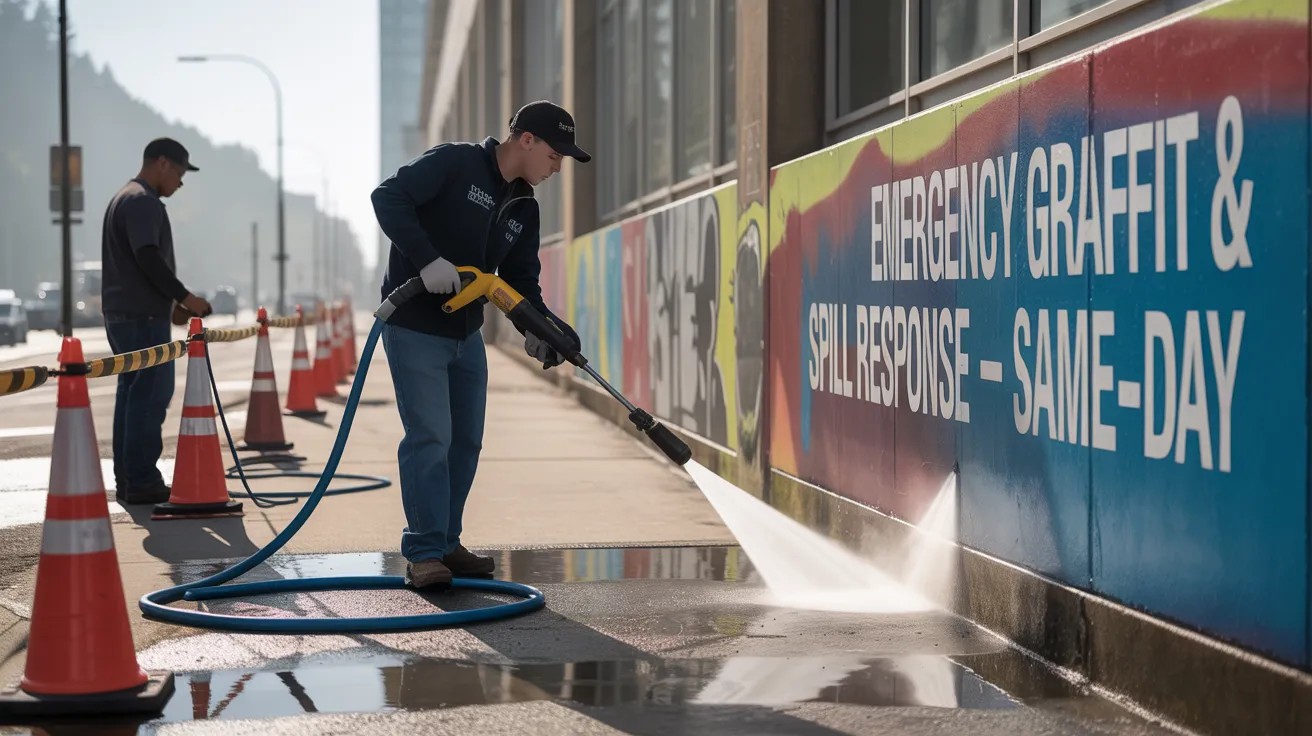
Yes, we accommodate immediate and rapid pressure washing services in Tacoma. We prioritize immediate assistance with priority scheduling for driveways, storefronts, graffiti removal, spills, and safety hazards. We'll provide a rapid assessment, comprehensive outline, and ETA within minutes. We deploy equipped crews with industry-standard cleaning equipment and environmentally safe products. Reach out with your property information, cleaning requirements, measurements, water source details, and pictures to arrange the earliest arrival window.
Can We Work Within HOA Rules and Community Guidelines?
Indeed. You receive detailed HOA coordination to ensure community compliance. You share your HOA rules, peaceful period requirements, water runoff parameters, and posting and notification rules; I plan around these requirements, secure approvals if needed, and record detergents, pressure levels, and wastewater capture. I utilize low-noise equipment, establish containment barriers, and channel discharge per stormwater regulations. I supply certificates of insurance and before/after photos. You obtain a complete plan, timeline, and post-clean verification for your HOA.
Are Written Service Warranties or Satisfaction Guarantees Available?
Yes. You receive written guarantees detailing scope, methods, and post-cleaning expectations, plus customer satisfaction guarantees. Should the results fall short of specified standards, we'll perform additional cleaning at no charge. Our warranty covers premature organic regrowth within a defined period provided recommended detergents and pressures are used. You'll get the warranty terms in writing with your estimate, including exclusions, maintenance guidance, claim steps, and response timelines, ensuring transparent, enforceable service assurance.
Can I Get a Seasonal Service Plan or Subscription for Regular Cleanings?
Indeed, recurring cleanings are available through flexible subscription options. Regular cleaning serves as ongoing protection for your property. You choose monthly, quarterly, or biannual intervals, and we'll coordinate cleanings based on seasonal patterns. Members receive priority booking, locked-in rates, and bundled surface packages. You can pause, adjust scope, or upgrade anytime. We document each visit, track surface conditions, and optimize PSI, detergents, and dwell time for consistent results.
Can You Document Before-And-After Results for Insurance or Property Records?
Absolutely. You'll receive comprehensive photo records and timestamped status reports for all work completed. We document panoramic and detailed photos before and after the service, record materials used, existing damage, and remedial steps, then classify everything by site. We can adapt reports to your insurer's requirements, incorporate humidity or pressure measurements when relevant, and send files via secure link or PDF. Upon request, we'll archive records for compliance reviews, insurance claims, and property documentation.
Concluding Remarks
You need noticeable improvements and dependable security. With a professional, insured Tacoma team using the proper technique-low-pressure washing for surfaces, higher PSI for concrete-you'll preserve materials, control costs, and increase longevity. Example: a North End property owner decreased algae buildup by 60% after a soft wash plus quarterly rinses, postponing repainting for an additional two years. Count on clear pricing, green cleaning solutions, and documented procedures. Arrange periodic service now so your property stays cleaner, longer, and costs less over time.